

River Hugger Swim Team History (2012-2025)
By Human Access Project Founder / Ringleader Willie Levenson
The first River Hugger swim crossing of the Willamette River was born from a dare, questionable judgment, and a deep desire to live in a city that loved its river.
Back in 2012, I was volunteering as an ambassador for a conference hosted in Portland. As part of an icebreaker challenge, participants earned points for doing outrageous things around the city and documenting them.
10 points to visit Timberline Lodge.
25 points to get a photo with the mayor.
25 points to swim across the Willamette River.
An Australian chap named Dave Brown approached me and said:
“Someone told me you’re the person to ask about how to swim across the Willamette River.”
Dave was an open water swimmer, and Australia has a much more normalized swimming culture than Portland did at the time. Looking at our beautiful river, he didn’t see a problem. He just needed directions.
A year before, I had just finished the first Big Float, which itself was considered a wildly outrageous idea. The Big Float was a downtown flotilla on inner tubes, paired with a party on land and in the water. It likely put more people in the Willamette River at one time than Portland had seen in nearly a century.
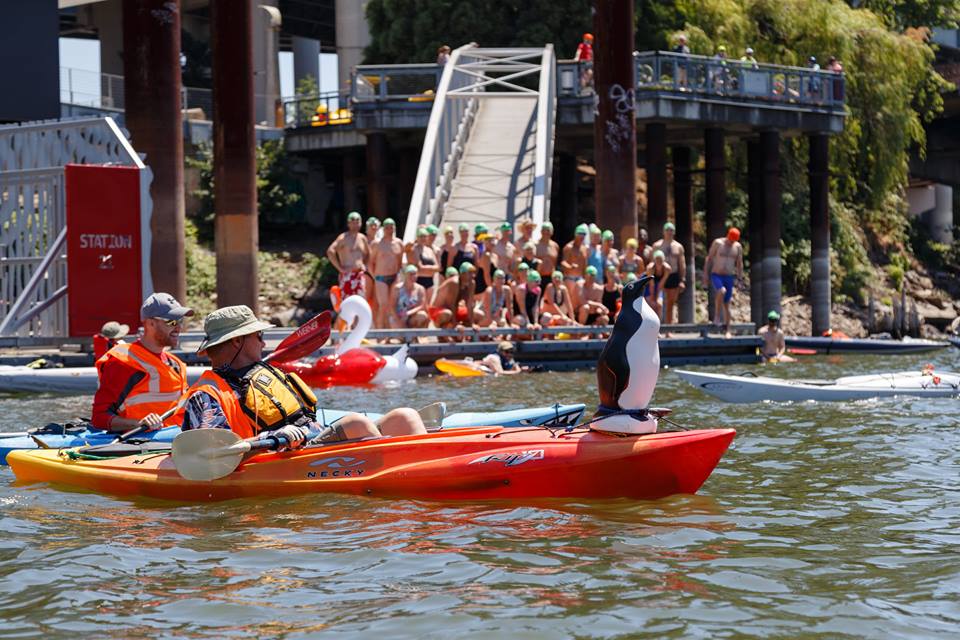
River Huggers kicked off Big Floats with a river crossing
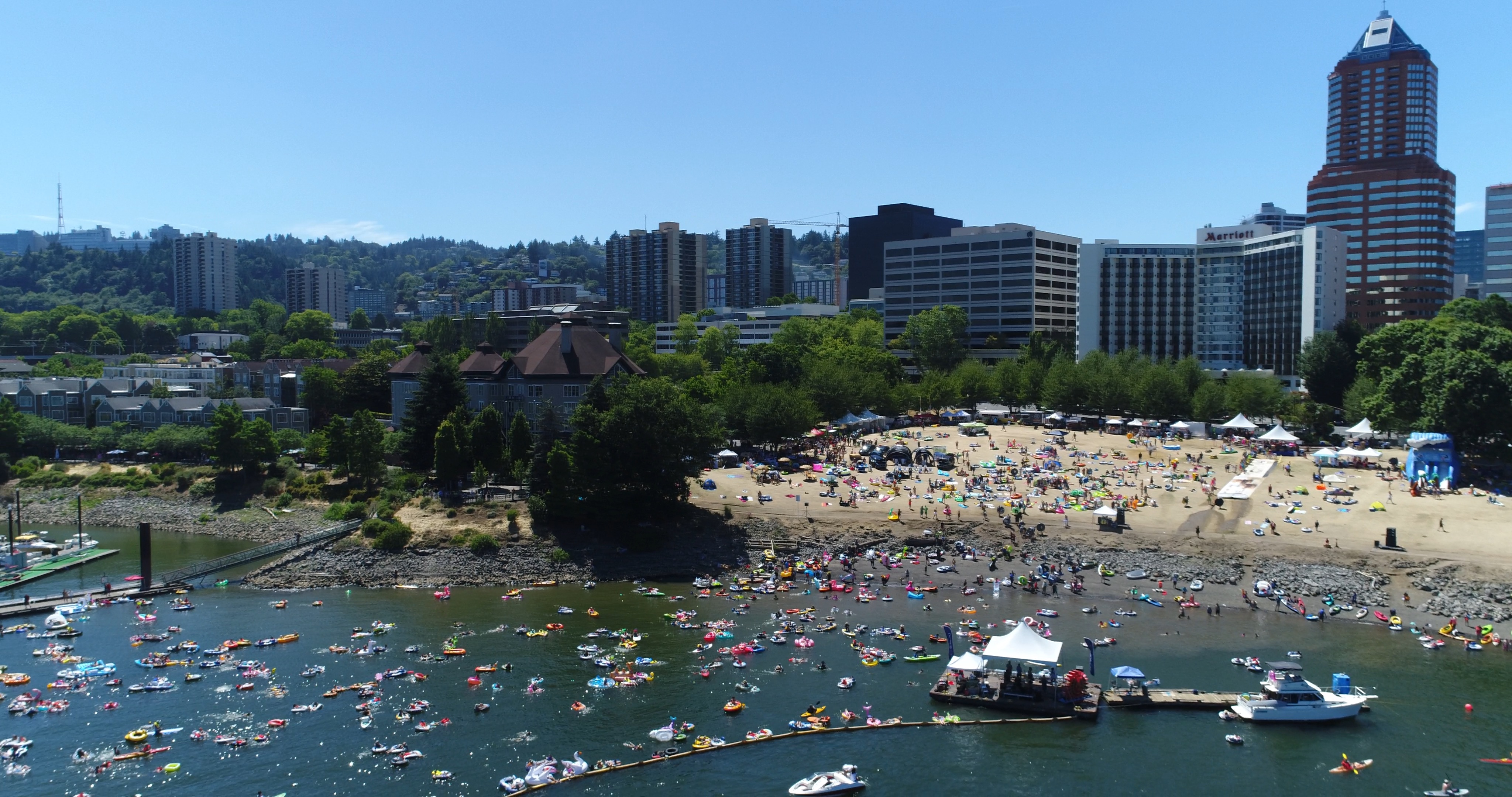
25,000 people ultimately participated in The Big Float over 10 years.
Still, Portland Parks & Recreation was pretty freaked out about the idea of swimming in the river at all. After enough meetings where rooms full of adults explained why this was a terrible idea, I started to wonder if maybe I actually was crazy. I felt a little like Kevin Bacon in Footloose, except instead of fighting for dancing, I was fighting for the radical concept of not being afraid of our own river.
So when Dave asked how one might swim across the Willamette, my first thought was:
“This has to be a prank. Someone put this Australian up to this.”
Then I realized he was dead serious.
My next thought, shaped by all those meetings and warnings, was:
“It’s too dangerous.”
Then another voice kicked in:
“…yeah, but now I kinda want to do it.”
The shortest crossing I knew at the time was from the Holman Dock, south of the Hawthorne Bridge, adjacent to what is now Audrey McCall Beach, over to the west side near the Tom McCall Bowl.
Dave showed up wearing a bright pink swim cap and matching pink briefs, which felt like an outrageous fashion statement at the time but, in retrospect, may have been a very smart visibility strategy.
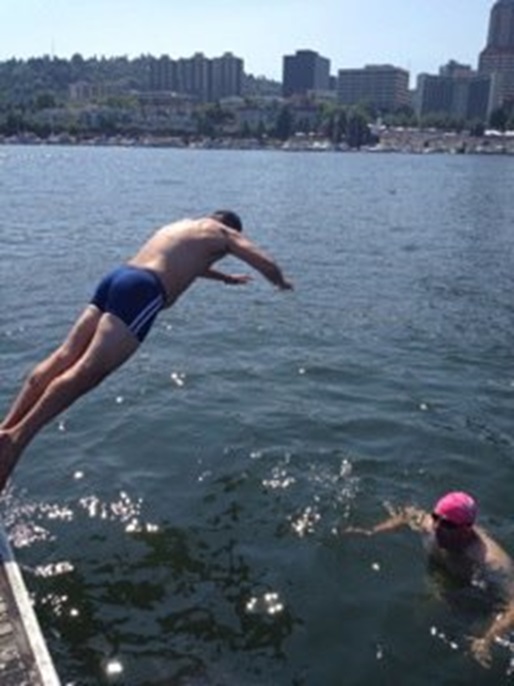
Willie and Dave
Now let me be crystal clear:
This unsupervised crossing was absolutely dangerous, and based on what I know today, I would never recommend it.
But there is a freedom that comes with ignorance, and innovation and social change often start with somebody ignoring accepted norms long enough to ask:
“Wait… but why can’t we do this?”
We swam cautiously, maybe 15–20 strokes at a time, constantly stopping to look for boats before continuing.
Despite swimming competitively as a kid, including my glorious reign as the 1978 Fallsmead Sharks 8-and-under champion, I identify spiritually less as a hardcore fitness swimmer and more as what I would call a river plunker.
A river plunker hangs out on a dock, beach, or boat, jumps in when they get hot, cools off, people watches, and repeats.
That said, that first crossing was incredibly empowering.
It also felt deeply symbolic.
Portland’s river had become psychologically viewed as a divider, between east and west, between habitat and recreation, between the city people aspired for and the city they inherited.
Swimming across it felt like reclaiming something.
It was joyful.
It was rebellious.
It was weirdly emotional.
It was fun.
It was also a subversive way of saying “fuck you” to the people who thought swimming in the river through the middle of our city was crazy, and to the bureaucracy trying to stop it.
At the time, Portland culture was filled with jokes about the Willamette River.
“You’ll grow a third eye.”
“Your skin will melt off.”
“You’ll come out glowing.”
Beneath all that humor was something more dangerous: hopelessness.
If people believe a river is beyond saving, they stop fighting for it.
Billions had already been invested in improving water quality. Massive environmental victories had already happened. Salmon were returning. Combined sewer overflows had dramatically improved.
But culturally, Portland still treated the river as dead.
Human Access Project’s broader mission became changing that psychology.
If this swim could move the public narrative from:
“That river will make you sick if you swim in it”
to:
“I would never swim in that river, but maybe it won’t kill you”
that alone represented the beginning of cultural change.
The crazy thing was that Portlanders had collectively accepted the idea that our city’s river should remain psychologically off-limits forever.
And even though I wasn’t a hardcore fitness swimmer, I instinctively felt that people who loved swimming for exercise would immediately understand the appeal. It felt like a Portland rite of passage to swim across the Willamette River.
Close friend, author, Big Float co-organizer, and original Human Access Project board member Tommy Vandel, better known as “T-Bone,” coined the name River Huggers, and in 2013 Human Access Project's program the River Hugger Swim Team was born with our first official group crossing.
The River Hugger Swim Team was born.
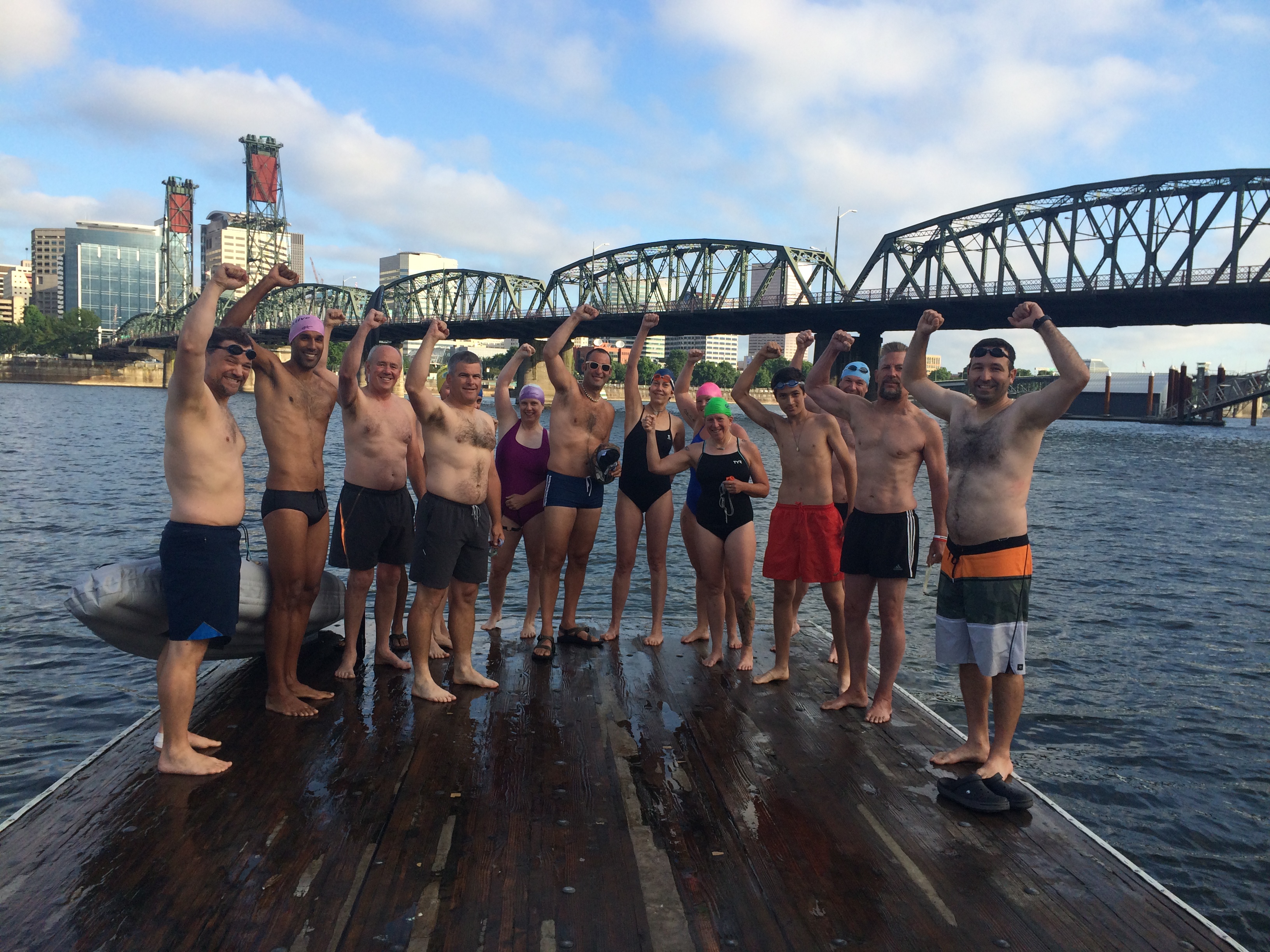
Pioneering Huggers
At the time, swimming in the Willamette River was still technically illegal under Portland city code.
Which honestly made the whole thing cooler.
A handful of attorneys on the Human Access Project board suggested we classify the swims as protests, hoping that might provide some civil-rights protections.
To this day, the core ethos remains:
“A recreational protest swim bringing attention to the extreme deficit of water’s edge access in Portland.”
The original Huggers embraced that energy.
The swims weren’t just recreation, they were equal parts advocacy, joy, performance art, exhibitionism and protest.
What started as a slightly rebellious swim club gradually evolved into a real open-water swimming community, complete with volunteer Captains who ran the swims, safety protocols, swim buoys, bright caps, paddle support, automated check-ins, and other organized procedures.
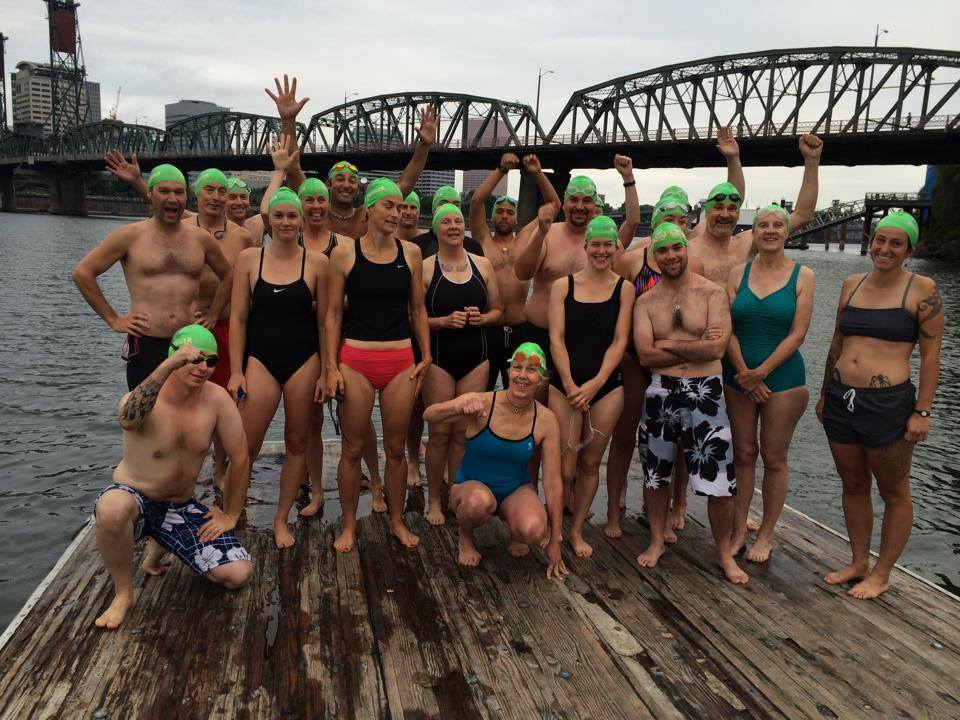
Our first Hugger Caps!
In 2015, River Huggers officially moved our home base to the Firehouse Dock, where we partnered with Portland Fire & Rescue to install Portland's first swim ladder added specifically for swimmers on a Portland dock.
That ladder mattered.
It represented a shift from:
“You people are insane.”
to:
“Okay… if you’re going to do this, let’s at least make it safer.”
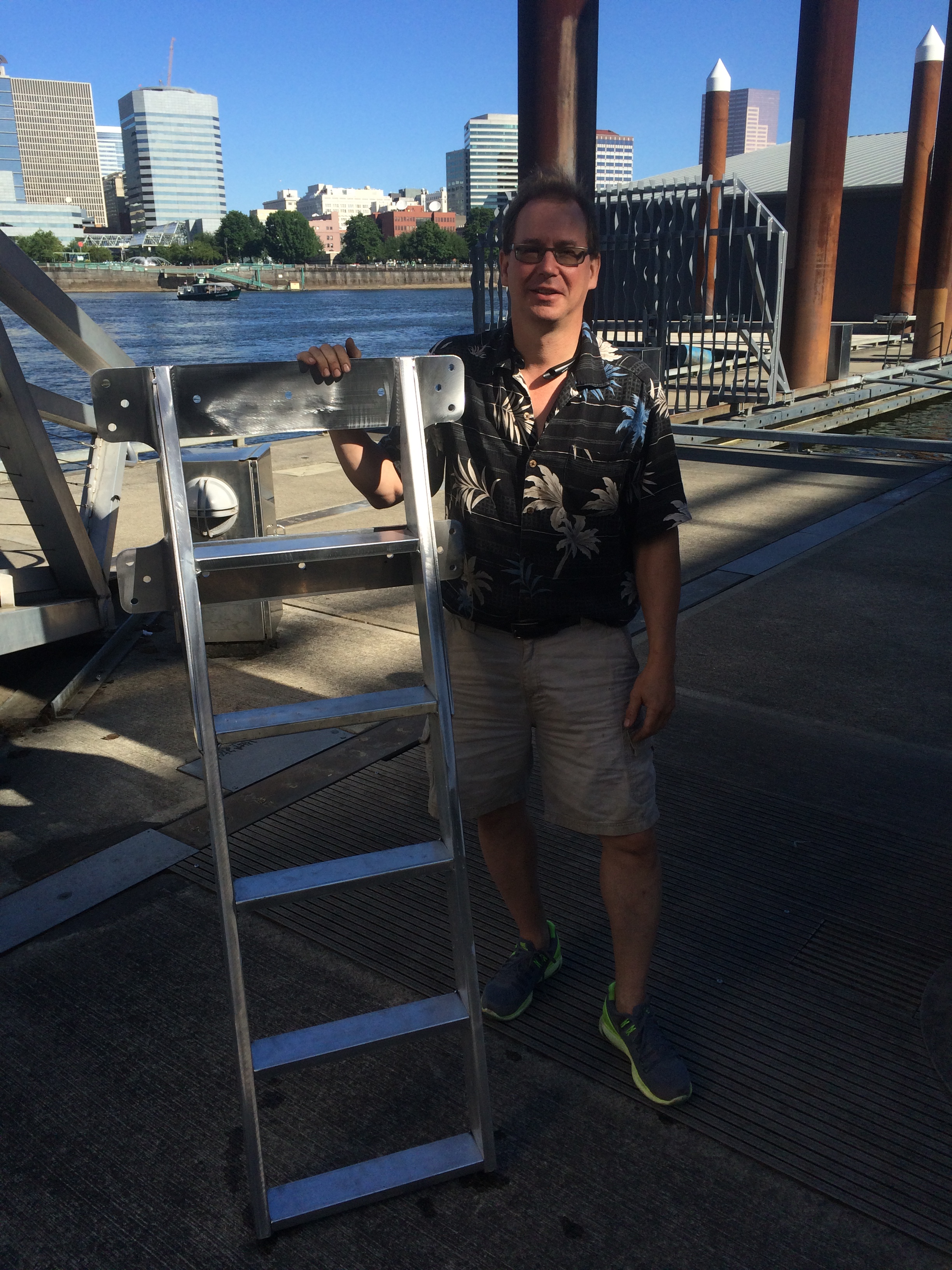
Honestly, that’s how a lot of meaningful civic progress works.
One incremental win at a time.
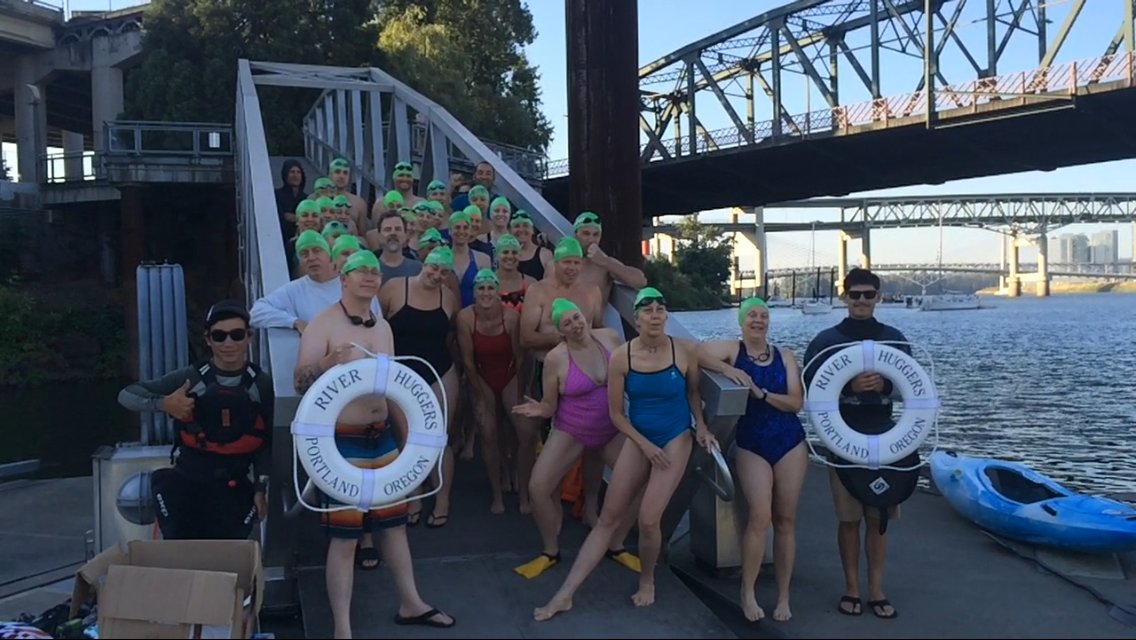
A second ladder and storage locker followed through continued collaboration with Portland Fire & Rescue, grounded in a shared belief that safety should remain the top priority and that the Huggers are ambassadors for open water swimming safety.
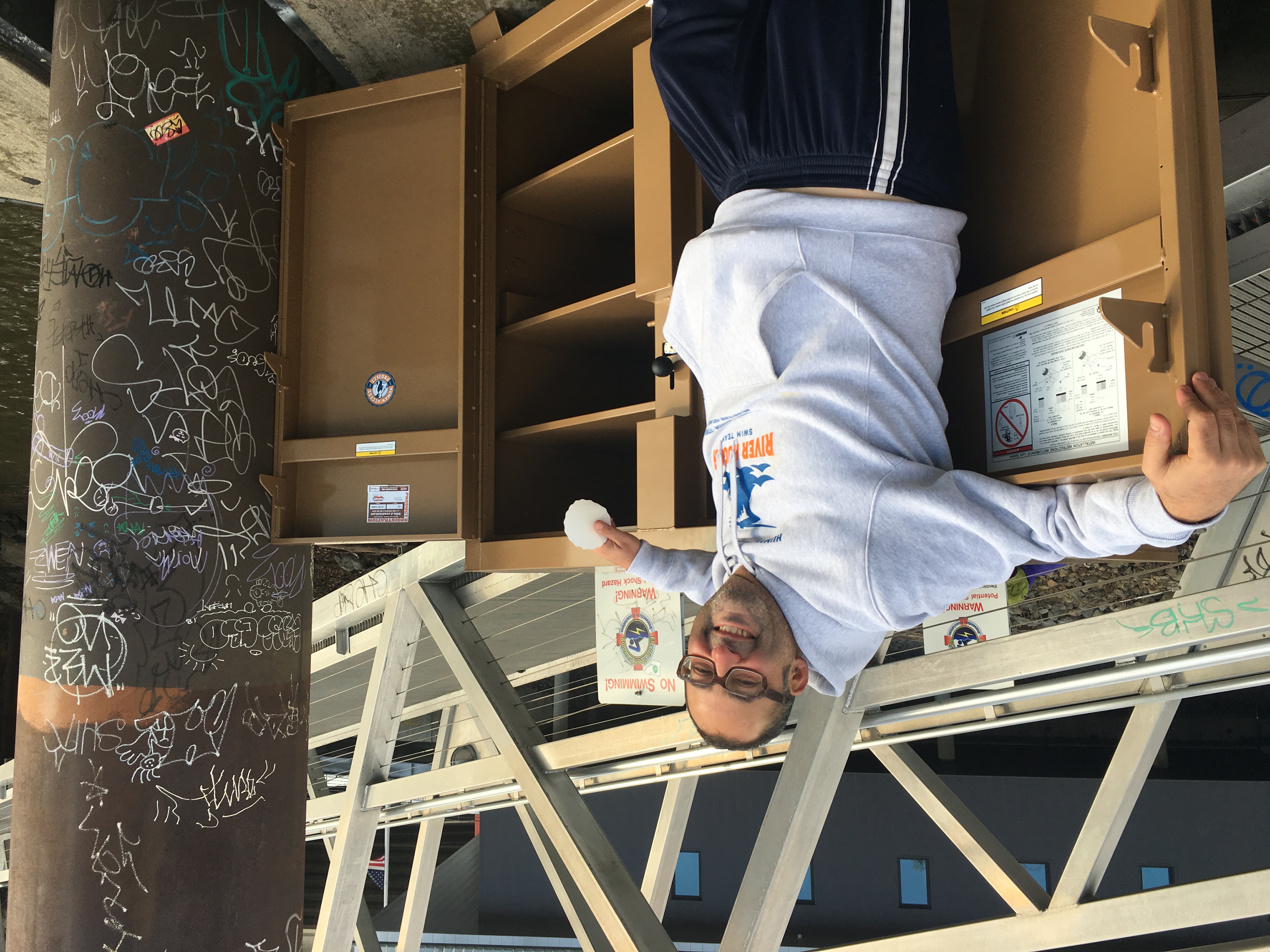
That effort eventually expanded to ladders on five additional docks managed by three separate agencies: Portland Bureau of Transportation, Portland Parks & Recreation, and Prosper Portland.
Each ladder required its own approval process and bureaucratic obstacle course.
In July 2018, after four River Hugger-led “Mayoral Swims” with Mayor Ted Wheeler, the City of Portland officially recognized the HAP River Huggers Swim Team as Portland’s “Ambassadors for Open Water Swimming Safety” and the city’s “Official Open Water Swim Team.”
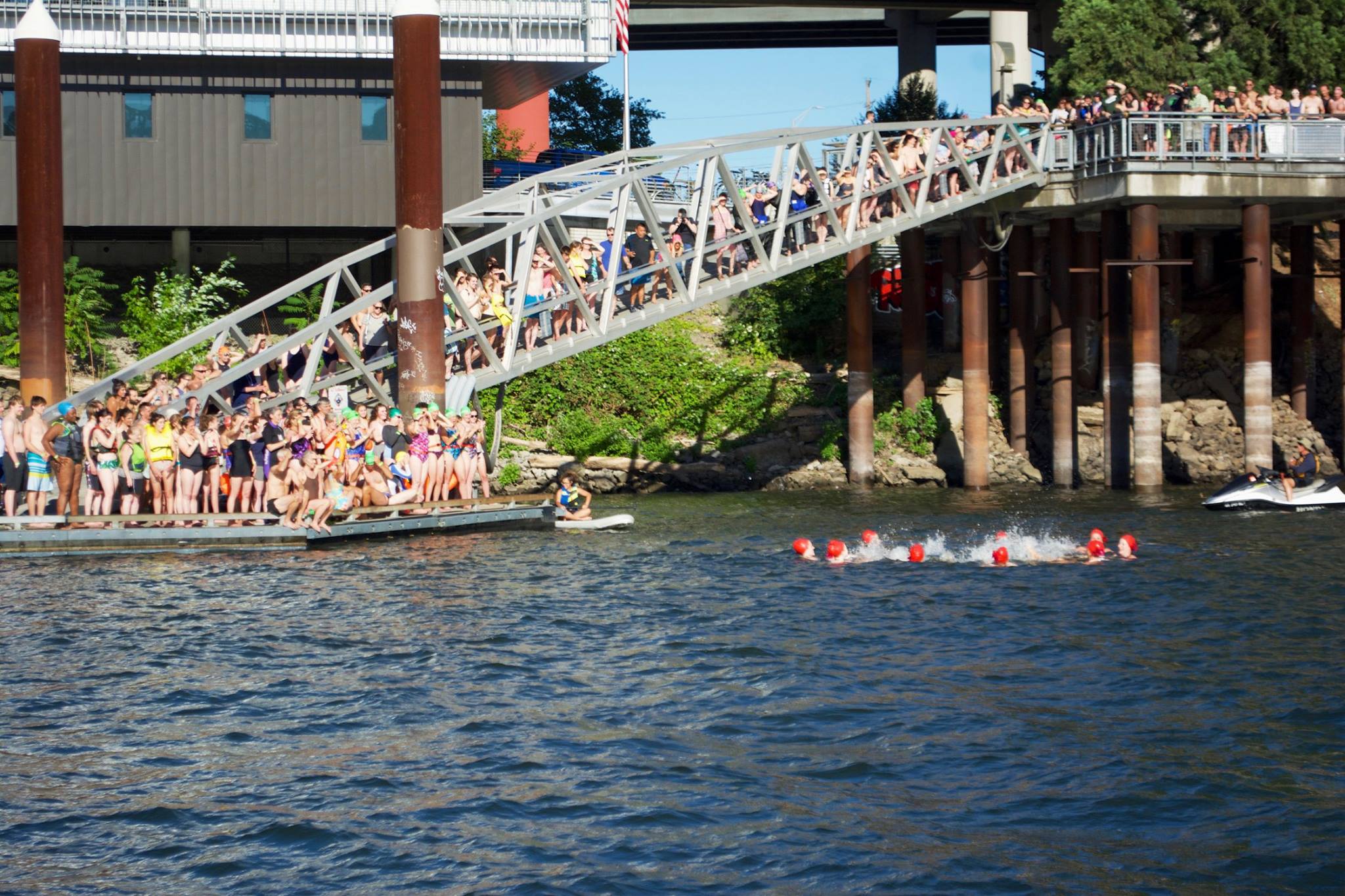
Second Annual Mayoral Swim with performance from the Rose City Raindrops
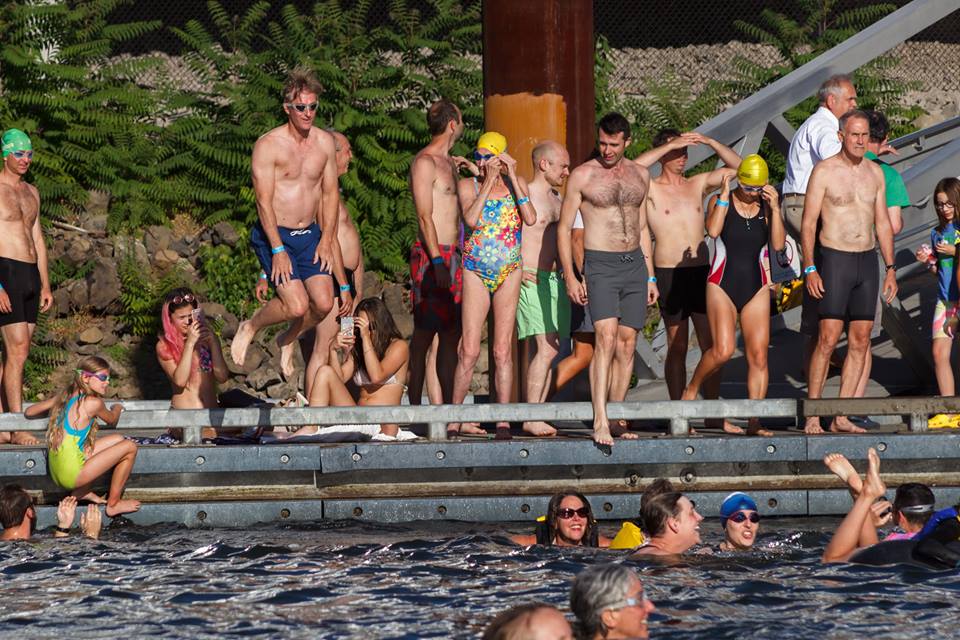
Mayor Wheeler Taking a Dip
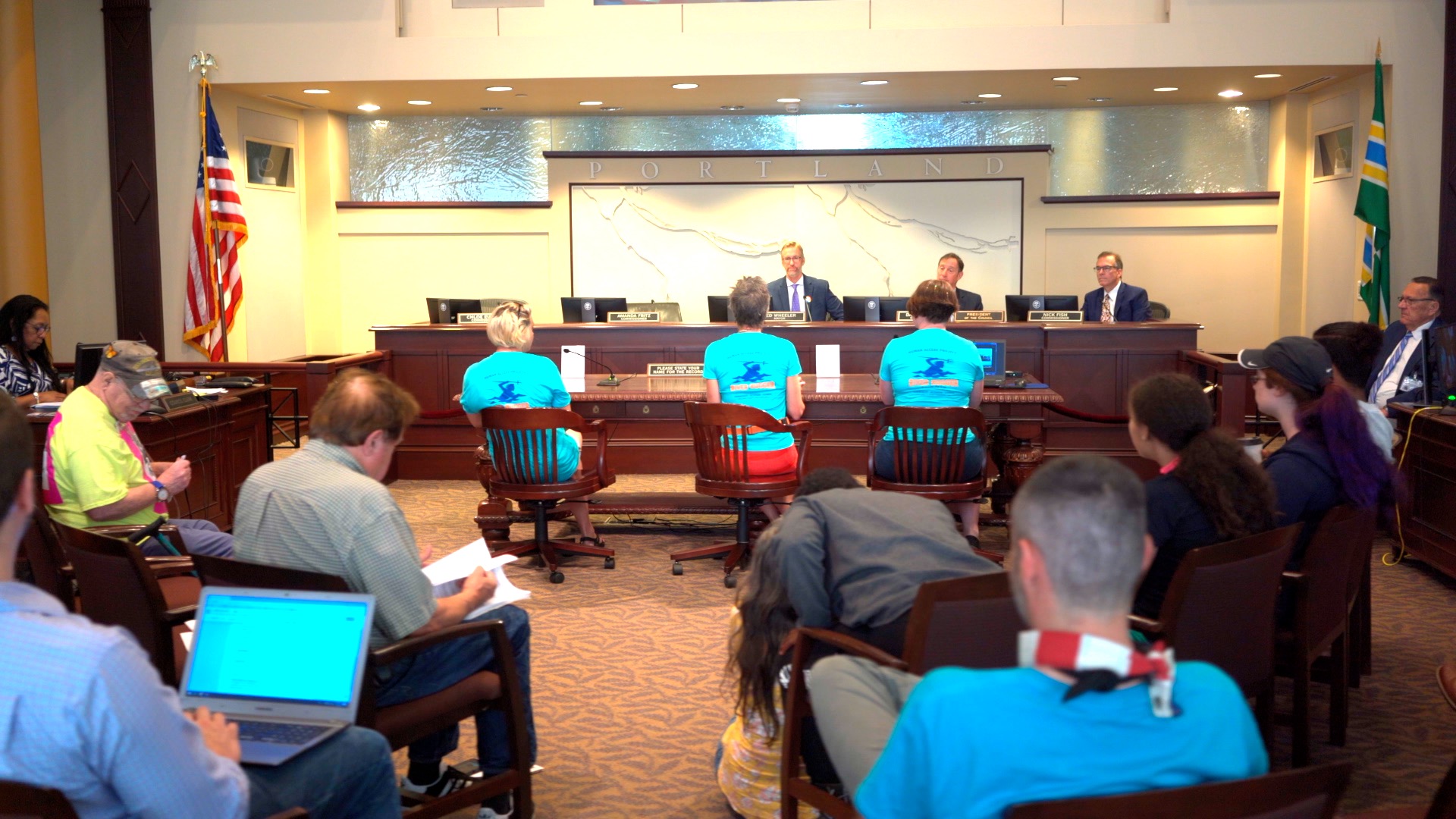
Huggers hit City Hall to be named Portland's Official Open Water Swim Team
Which remains objectively hilarious considering how this whole thing started.
July 11 was also officially designated River Hugger Swim Team Day.
Not bad for what began as borderline water trespassing.
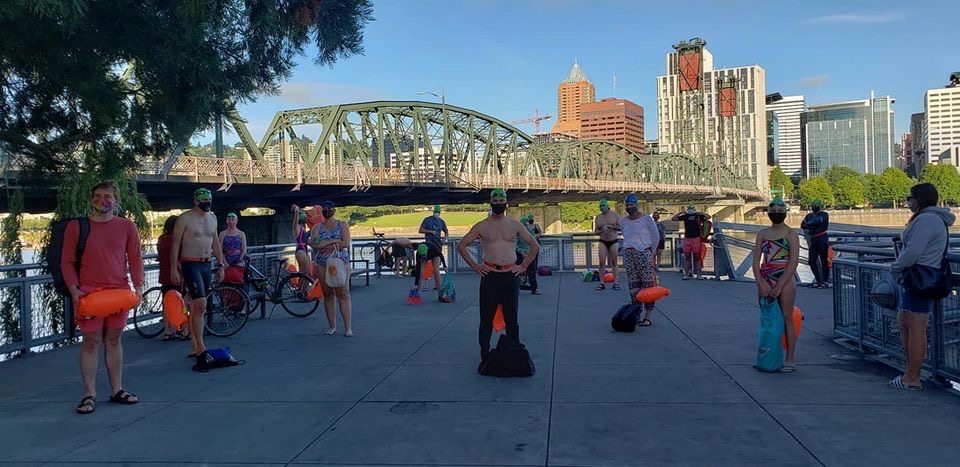
Remember Social Distancing?
Our breakout years came during the pandemic, when participation exploded. At one point we had to create multiple heats because of governor-mandated group size restrictions.
Turns out when people are stressed, isolated, and trapped indoors, swimming across a river with a bunch of friendly weirdos starts sounding pretty appealing.
In 2022, Human Access Project worked with Portland Parks & Recreation to establish six official public swim areas. Regular Hugger swims helped demonstrate both demand and the viability of safer urban swimming infrastructure.
In 2025, River Huggers surpassed even our pandemic-era participation records, with 320 individual swimmers, 172 new participants, and nearly 2,000 total miles swum.
Since 2013, more than 1,200 people have participated in the River Hugger program, and Portland now has multiple independent open-water swimming communities that simply did not exist before.
But now, with the emergence of the Ross Island Lagoon harmful algae bloom, even more is at stake. As long as conditions are safe, the Huggers have evolved into water quality ambassadors, watchdogs, and amplifiers.
In 2027, River Huggers will celebrate 15 years since that first official group crossing.
My hope is that the Huggers retain the culture I worked so hard to build: community, fitness, recreation, joy, inclusivity, and a little bit of rebellion.
At the same time, safety absolutely matters.
It is critical that anyone wearing a River Hugger Swim Team cap models basic safe open water swimming behavior. Never swim alone. Always use a buoy with a whistle. Seek paddle support or shore supervision whenever possible.
If you cannot do that, respectfully, please be safe and do not wear your Hugger cap.
But beyond that, I’m incredibly proud to be part of a community that grew from that first imperfect crossing with Dave.
What started as curiosity became community.
And community, over time, became culture.
I will always be proud to be a Hugger, and part of the Hugger family.
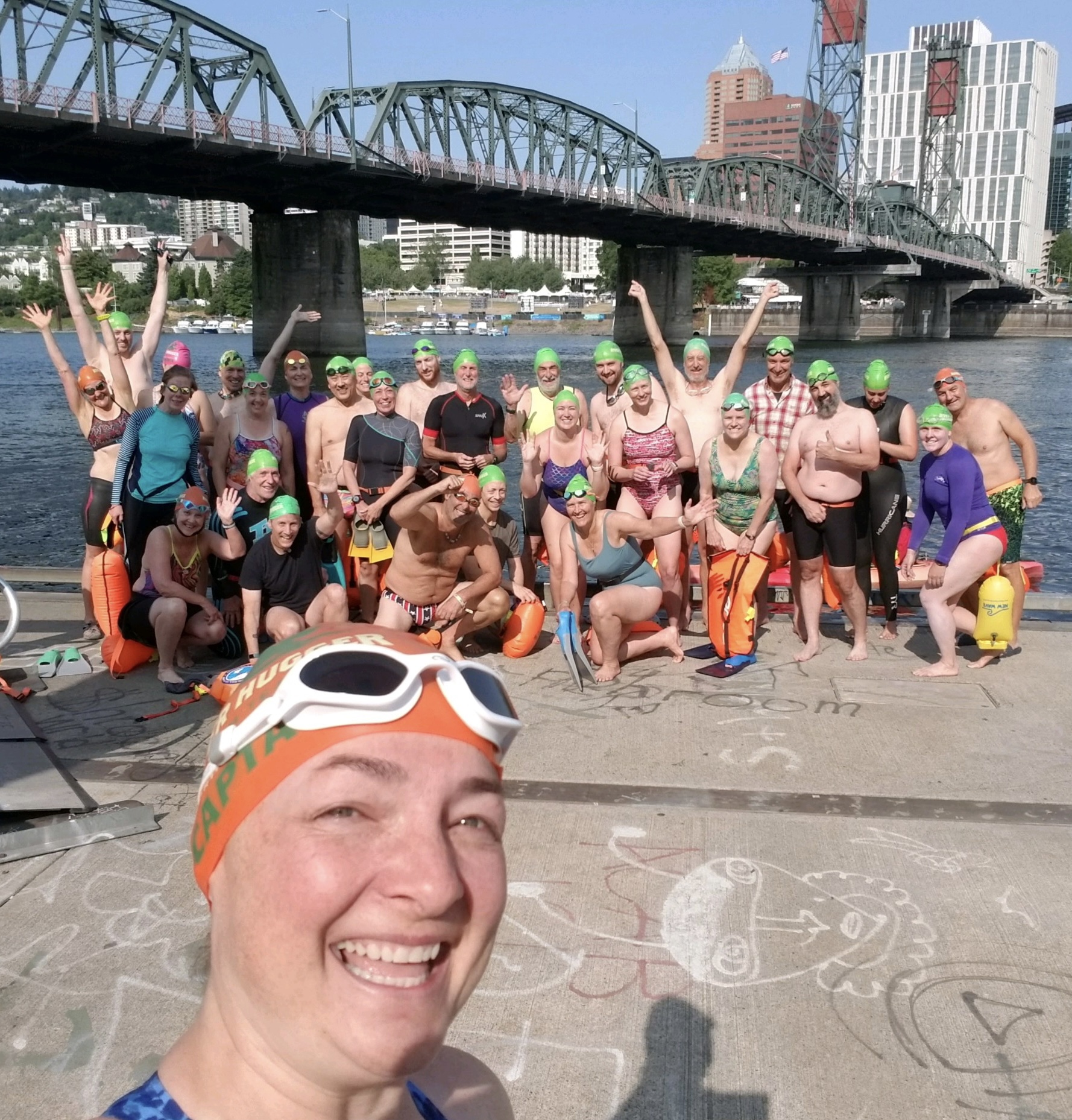
Captain Leah and crew